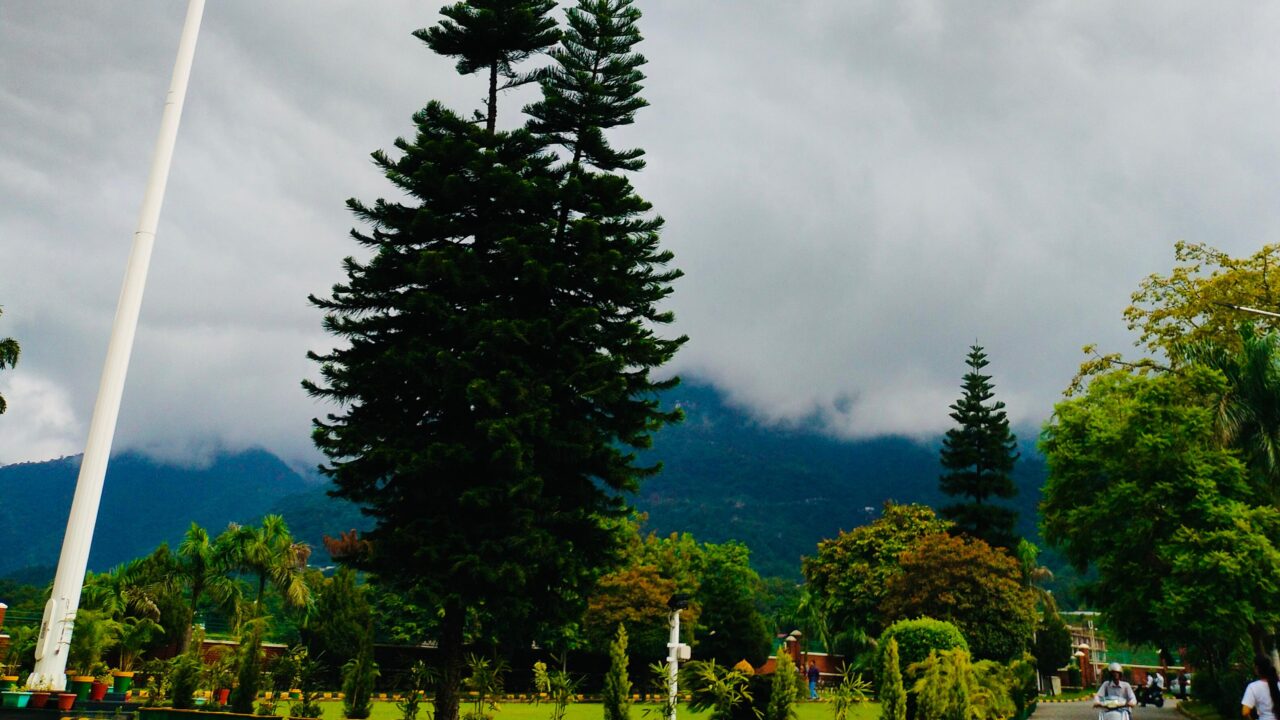
The season’s first snow has just arrived in Uttarakhand. Over the past few days, the high peaks around Badrinath, Hemkund Sahib and Niti Valley have turned white, and the lower hills have that thin, sharp chill that makes you reach for a second blanket without quite knowing why.
I saw the photos this morning and felt a tug in my chest. I lived in these mountains for five years, and that first-snow feeling still knows exactly where to find me.
If you’ve been waiting for a sign to plan your Uttarakhand travel, consider this a gentle nudge.
TL;DR
- Uttarakhand has two halves: Garhwal (west) and Kumaon (east).
- Garhwal is pilgrimage, adventure, Rishikesh, and skiing at Auli.
- Kumaon is quieter: old hill stations, orchards, and endless Himalayan views.
- Kumaon’s Nainital and Kainchi Dham, now in the spotlight after the film Hanuman Ansh, offer rare peace.
- Both are equally beautiful. They just show you different sides of mountain life.
- Living in the hills feels nothing like visiting them.
- Best base: land in Dehradun and stay on Rajpur Road or in Jakhan.
Garhwal: The Restless, Spiritual, Adventurous One
The western half is where most people begin. Dehradun, Haridwar, Rishikesh, Mussoorie and the four Char Dham shrines all sit here.
Rishikesh is the gentle doorway: temple bells over the Ganga at sunrise, yoga, rafting and bungee jumping if you’re brave, and long evenings on the ghats where nobody is in a hurry.
Auli is the winter showpiece. From around January into March, its slopes become one of India’s best-known ski spots, with the Nanda Devi range glowing behind. Nearby, Chopta (with Tungnath, the highest Shiva temple in the world), Dayara Bugyal, and Kedarkantha near Uttarkashi make beautiful snow treks, while Mussoorie, Dhanaulti and Nag Tibba get their own dusting of white.
Garhwal has an energy to it. People come here to do something.
Kumaon: The Quiet, Soulful, Slow One
Cross over to the east, and the mood softens. Nainital, Almora, Ranikhet, Kausani, Mukteshwar, Binsar, Munsiyari, and Pithoragarh, plus the jungles of Jim Corbett, live here.
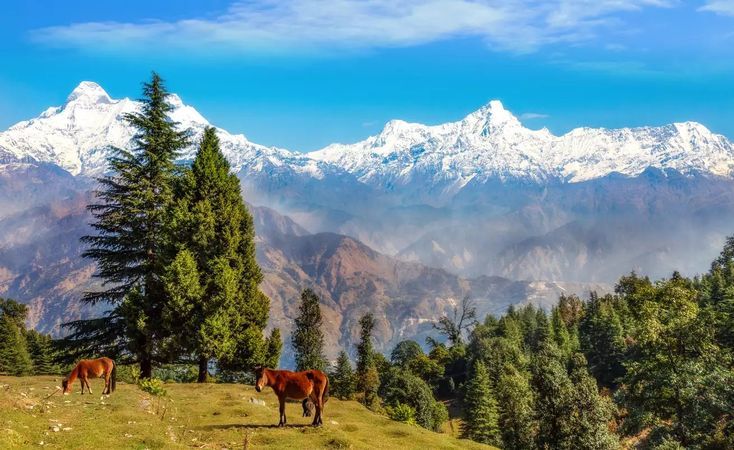
Where Garhwal shouts, Kumaon whispers. Think old stone temples like Jageshwar, pine forests, orchards, and mornings when the whole Himalayan range, Panchachuli included, is laid out like a painting. Munsiyari is my winter favourite, where snow feels earned. Kausani gives sunrises that make you forget your phone. Almora has that lived-in, chai-and-bookshop charm. And the food: bhatt ki churkani, aloo ke gutke, singori, bal mithai. I still crave them.
Kumaon is where people come to be.
Kainchi Dham: The Quiet That Everyone Is Now Talking About
If there’s one place in Kumaon that has quietly stepped into the spotlight, it’s Kainchi Dham, the ashram of Neem Karoli Baba, a short drive from Nainital. For years, few people outside devoted circles knew much about it. Virat Kohli and Anushka Sharma were among the well-known names who visited, and even that felt like a quiet secret shared among those who cared.
Then came Hanuman Ansh, the film based on the life of Neem Karoli Baba, which was released on 7 August 2026 and became an unexpected hit, and suddenly a lot more people are asking about this little corner of the hills.
But long before the movie, it was simply one of the most peaceful places I’ve known. The name Kainchi means scissors, and the hills here seem to cross each other like open blades, with the road folding through sharp, scissor-like bends to reach it. You step in, the noise falls away, and something in your chest settles.
If you go, go early on a weekday, dress modestly, and keep your phone in your pocket. It has become far busier lately, and the quiet is the whole point.

Living In the Hills Is Not the Same as Visiting Them
You know what? The same place feels completely different when you actually live there.
When you visit, you carry a checklist. Sunrise point by six, temple by nine, cafe by one. When you live there, there’s no checklist. There are only random days, and you’re always just a mood away from a memory.
For me, that place was Dehradun, and the ritual was waiting for the weather to change. As soon as the clouds rolled in and the air turned cool and grey, someone would text the group, “Maggi?” and that was the whole plan. A few friends, a bike or a car, a winding road up, and a roadside Maggi point with plastic chairs, hot chai, and mist drifting over the slopes. Some of those stalls didn’t even have names worth remembering. But it never mattered. Maggi in the hills with the rain just starting tastes like something no restaurant can recreate.
And then the cravings that find you years later. Mine is the paan ice cream near Prakasheshwar Temple on the Dehradun- Mussoorie Road. Some days I’m somewhere far away, minding my own business, and I want it so badly it almost hurts. Not because it’s fancy, but because it comes with a whole evening attached: the random rounds up the Mussoorie road, the laughter, someone insisting on one more round.
What I loved most: in the mountains, nobody says no. You send one message, and the replies come in within minutes. “I’m in.” “Wait for me.” “Should I bring snacks?” Maybe because every little outing was worth it. Maybe because the people there are simply warm, loving, and welcoming in a way you only understand once you’ve been on the receiving end.
What Five Years in the Hills Taught Me
The first snowfall doesn’t arrive with drama. You wake up, and the world sounds different, muffled, as if someone has turned the volume down on the valley. I remember standing in a doorway with chai, not wanting to break the silence.
Random heavy rainfalls and strong winds led to power cuts, and they truly became gifts: candlelight, a neighbour’s knock, a plate of something hot shared without fuss. The monsoon taught me humility, with landslides and cancelled plans, and I still hold my itineraries lightly because of it. Holi in Kumaon is more music than colour, and evenings in Rishikesh felt like the whole town exhaling together.
My pace changed too. I wrote about that gentler rhythm of life in Slow Mornings: Way to a Serene Life in Your Twenties. The mountains taught me long before I had the words.
Where To Base Yourself (My Honest Tip)
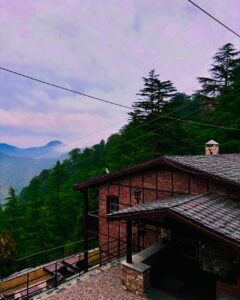
If you’re planning a trip, land in Dehradun and book an Airbnb on Rajpur Road or in Jakhan. Trust me, it’s one of the best decisions you’ll make. The hosts there take care of everything, from the little things like bringing in the required groceries for your stay to suggesting where to eat and what to do if the weather turns, and it feels less like a rental and more like being looked after by a local friend.
The real magic is the location. This is the road that leads you into so much of Garhwal. Mussoorie is just 16 to 20 km away, and from the same base you can reach Landour (which I will talk about in some other blog), Dhanaulti, Chamba, Barlowganj, and plenty of other quiet corners without ever packing up and moving hotels. Come back each evening to the same warm room, the same chai, and the same view. It’s the closest a short trip can get to feeling like you live there.
Before You Go
Check weather and road conditions first, since snow and landslides can close routes quickly. The Char Dham shrines close for winter around Diwali, so save those for summer. Pack layers, book ahead for Auli and Chopta in peak snow months, and stay longer in fewer places. And if you find yourself dreaming of a longer stay, just book the Airbnb ahead of your journey before deciding anything. (Ask me how I know.)
So, Which One Would You Choose?
I’ve never been able to settle the issue, even after five years.
Some days I’m Garhwal: the ghats, the thrill of a bungee jump, and the feeling of the first ski run. Other days I’m entirely Kumaon: the long views, quiet lanes, orchard mornings, and something homemade on the plate.
Maybe you don’t have to choose forever, just for this trip, and let the other one wait for you.
So tell me: are you a Garhwal soul or a Kumaon soul? Leave a comment. I’d love to know where you’re headed first.
Leave a Reply